B Vitamins and Nerve Health: What Four Letters on a Label Really Mean
Thiamin, B6, B12 and folate support nerves and treat deficiency-related nerve damage, but a 2008 Cochrane review found insufficient evidence that extra B vitamins relieve neuropathy in non-deficient people. Very high, long-term B6 doses (grams a day) can themselves cause nerve damage, and high folic acid can mask a B12 deficiency. Neuro Pulse Pro's amounts sit above the RDA and under the upper limit for all four.
B vitamins and nerve health: what four letters on a label actually mean
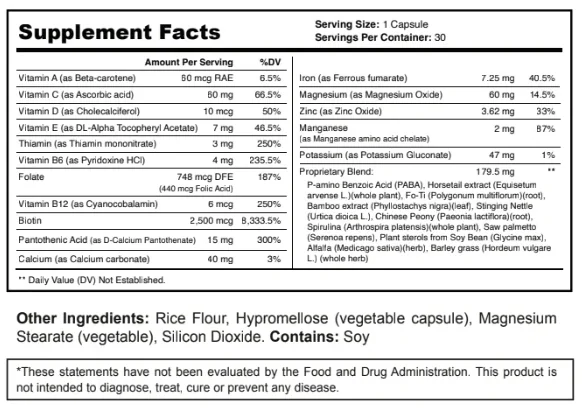
Four B vitamins do most of the nerve-related work on a Supplement Facts panel: thiamin (B1), vitamin B6, vitamin B12 and folate. Neuro Pulse Pro carries all four, each well above 100% of the Daily Value, and the sales page frames the capsule around nerve comfort.
This guide walks through what each of these four vitamins actually does for nerves, who tends to run low, two real risks worth knowing (B6 at very high doses, and folic acid hiding a B12 problem), what a Cochrane review found when researchers tested B vitamins against nerve pain, and how Neuro Pulse Pro's specific amounts line up against the official numbers.
What do thiamin, B6, B12 and folate actually do for nerves?
Thiamin (B1) helps nerve cells use glucose for energy. Long-term thiamin deficiency causes beriberi, a well-established cause of peripheral neuropathy, so correcting a real deficiency reliably helps nerve symptoms (National Institutes of Health, 2023).
Vitamin B6 is needed to build neurotransmitters, the chemical signals nerves use to talk to each other (National Institutes of Health, 2023). Both too little and, less commonly, far too much B6 can damage nerves, which is covered below.
Vitamin B12 helps maintain the myelin sheath, the insulating layer around nerve fibers. Untreated B12 deficiency can cause real neurological damage, including numbness and tingling, plus a type of anemia (National Institutes of Health, 2025).
Folate works alongside B12 in the same metabolic pathway. A folate shortfall can also cause anemia and, less directly, contributes to nerve-related symptoms tied to that same B12 pathway (National Institutes of Health, 2026).
What causes B-vitamin deficiency, and who is at risk?
All four vitamins mainly help nerves in one specific situation: when someone is actually deficient. That is less common than a supplement ad might suggest, but a few groups run a real risk.
| Vitamin | Common risk factors for low levels | What deficiency can look like |
|---|---|---|
| Thiamin (B1) | Alcohol use disorder, poor diet, malnutrition | Beriberi, peripheral neuropathy |
| Vitamin B6 | Poor diet, some medicines, kidney disease | Nerve and skin symptoms; rare without a clear cause |
| Vitamin B12 | Long-term metformin or acid-reducing drugs (PPIs), older age, vegan diets, absorption disorders | Numbness, tingling, megaloblastic anemia |
| Folate | Poor diet, alcohol use, pregnancy (higher need), some absorption disorders | Megaloblastic anemia; can mask a B12 problem (see below) |
Vitamin B12 is the clearest nerve-specific example: NIH ODS notes that certain drugs, including metformin and long-term acid-reducing medicines (proton pump inhibitors), can lower B12 absorption over time, which is one reason people on those medicines sometimes get their B12 checked (National Institutes of Health, 2025).
If you have diabetes, drink heavily, take metformin or a long-term acid reducer, or simply eat a limited diet, a blood test is the only way to know if you are actually low. A daily multivitamin is not a substitute for that test.
Can too much vitamin B6 hurt your nerves?
NIH ODS reports that chronic intake of 1,000 to 6,000 mg of vitamin B6 a day for 12 to 40 months has caused severe, progressive sensory neuropathy with loss of coordination (ataxia), plus painful skin lesions and sun sensitivity. Symptoms usually improve after stopping the supplement, but the nerve damage itself can take a long time to resolve (National Institutes of Health, 2023).
The adult upper limit for vitamin B6 is 100 mg a day (National Institutes of Health, 2023). The doses linked to nerve damage are 10 to 60 times that limit, taken for over a year, usually from high-dose single-ingredient B6 supplements rather than a multivitamin. Neuro Pulse Pro's 4 mg of B6 is far below both the 100 mg upper limit and the gram-level doses tied to harm.
The practical takeaway: check every B6-containing product you take and add up the total. A single multivitamin dose is not the risk; stacking several high-dose B6 supplements over months or years is.
Can folic acid hide a vitamin B12 problem?
NIH ODS warns that high folic acid intake can mask an underlying vitamin B12 deficiency: folic acid corrects the anemia that usually signals low B12, while the neurological damage from that same B12 deficiency keeps progressing unnoticed (National Institutes of Health, 2026).
In plain terms, a blood test that only looks at red blood cells can come back looking fine even though a B12 problem is still there and still affecting nerves. That is why B12 status is sometimes checked directly, especially in anyone with unexplained numbness or tingling and a diet or medicine history that raises risk.
Neuro Pulse Pro's 440 mcg of folic acid is under the 1,000 mcg adult upper limit (National Institutes of Health, 2026), so this is not a dose-safety issue by itself. It is a reason to ask for B12 to be checked specifically if you have nerve symptoms, rather than assuming a normal anemia test rules out B12 as a cause.
What does the research actually show for B vitamins and nerve pain?
The direct research question is not whether B vitamins matter for nerves in general (they do, in deficiency) but whether taking extra B vitamins helps someone with existing peripheral neuropathy. A 2008 Cochrane systematic review looked at that question directly (Ang et al., 2008).
The reviewers found only limited data from randomized trials and concluded the evidence was insufficient to say whether vitamin B supplementation helps or harms peripheral neuropathy. One small trial hinted at a modest benefit from benfotiamine, a B1 derivative, and one study found higher-dose B-complex worked better than a lower dose, but B vitamins generally performed worse than alternatives such as alpha-lipoic acid. The reviewers called for larger, better trials before drawing conclusions.
That is a meaningfully different claim than "B vitamins support nerve comfort." The honest summary is: B vitamins clearly treat deficiency-related nerve damage, and the evidence for taking extra B vitamins beyond that, to relieve nerve symptoms in someone who is not deficient, is thin.
How does Neuro Pulse Pro's B-vitamin dose compare to the official numbers?
| Vitamin | Adult RDA | Adult upper limit (UL) | Neuro Pulse Pro, per capsule | % Daily Value |
|---|---|---|---|---|
| Thiamin (B1) | About 1.1-1.2 mg/day | None established | 3 mg | 250% |
| Vitamin B6 | 1.3-1.7 mg/day | 100 mg/day | 4 mg | 235.5% |
| Folate | 400 mcg DFE/day | 1,000 mcg/day (folic acid) | 748 mcg DFE (440 mcg folic acid) | 187% |
| Vitamin B12 | 2.4 mcg/day | None established | 6 mcg | 250% |
Every B-vitamin amount on this label sits well above the RDA and, where a limit exists, well under the upper limit. That is typical of a multivitamin built to look generous on the Daily Value column rather than to match a studied nerve-support dose; there is no single confirmed dose of thiamin, B6, B12 or folate that treats peripheral neuropathy in non-deficient adults (Ang et al., 2008).
None of the four amounts here is a safety concern by itself. What the label does not include is any of the ingredients most often studied specifically for nerve support, such as alpha-lipoic acid, benfotiamine or acetyl-L-carnitine. For the rest of the formula, including the biotin dose and the unlabeled herbal blend, see biotin and lab tests and proprietary blends explained.
Should you count on B vitamins for nerve comfort?
B vitamins are essential, well-studied nutrients, and correcting a real deficiency in thiamin, B6, B12 or folate can genuinely relieve nerve symptoms that deficiency caused. Neuro Pulse Pro's doses of all four sit in a reasonable range: above the RDA, under any established upper limit.
What the label and the research do not support is the idea that adding more of these vitamins on top of a normal diet relieves nerve comfort in someone who is not deficient. The Cochrane review found the trial evidence too thin to draw that conclusion (Ang et al., 2008), and the formula skips the ingredients most often studied for that purpose.
If you have new, spreading or one-sided numbness, weakness, or a foot wound that will not heal, see a clinician before trying any supplement. For the full label, including the biotin dose and the proprietary blend, see the ingredients page or the Supplement Facts breakdown. Our nerve comfort guide covers common causes and when to seek care, and the side effects page lists the full caution list.
Questions readers ask
Do B vitamins really help nerve pain?
Mainly when you are deficient. A 2008 Cochrane review found the trial evidence insufficient to say whether extra B vitamins help peripheral neuropathy in people who are not deficient (Ang et al., 2008).
What does vitamin B12 do for nerves?
B12 helps maintain the myelin sheath around nerve fibers. Untreated deficiency can cause numbness, tingling and other neurological damage, plus a type of anemia (National Institutes of Health, 2025).
Can too much vitamin B6 damage nerves?
Yes, but only at very high, long-term doses. NIH ODS reports 1,000-6,000 mg a day for over a year can cause sensory neuropathy. The adult upper limit is 100 mg a day; Neuro Pulse Pro's 4 mg is far below that (National Institutes of Health, 2023).
Can folic acid hide a B12 deficiency?
Yes. High folic acid can correct the anemia that usually signals low B12 while nerve damage from the B12 deficiency keeps progressing unnoticed (National Institutes of Health, 2026). Ask for B12 to be checked directly if you have unexplained nerve symptoms.
Who is most likely to be low in B12 or thiamin?
People with diabetes, alcohol use disorder, a limited diet, or long-term use of metformin or acid-reducing medicines, since these can lower B12 absorption over time (National Institutes of Health, 2025); thiamin deficiency is most linked to alcohol use disorder and malnutrition (National Institutes of Health, 2023).
How does Neuro Pulse Pro's B-vitamin dose compare to the RDA?
All four amounts are well above the RDA and under any established upper limit: thiamin 3 mg, B6 4 mg, folate 748 mcg DFE (440 mcg folic acid) and B12 6 mcg per capsule.
Should I see a doctor about nerve symptoms before trying a supplement?
Yes, especially if symptoms are new, spreading, one-sided, come with weakness, or include a foot wound that will not heal. A supplement cannot diagnose or treat the underlying cause.
Does Neuro Pulse Pro contain alpha-lipoic acid or other nerve-specific ingredients?
No. The label lists B vitamins, biotin, minerals and an 11-ingredient herbal blend. It does not list alpha-lipoic acid, benfotiamine or acetyl-L-carnitine, the ingredients most often studied specifically for nerve support.
Keep reading
Biotin and lab tests
Why high-dose biotin skews blood tests, the FDA troponin warning, thyroid test effects, and what to tell your clinician ...
Read →Proprietary blends explained
What a proprietary blend is, why individual amounts matter, what's inside Neuro Pulse Pro's 179.5 mg blend, the fo-ti li...
Read →How much does Neuro Pulse Pro cost?
Pack sizes, days of supply and how to pick the right one.
Read →Order Neuro Pulse Pro from the authorized retailer
30 capsules per bottle, 1 a day. Packs of 2, 3 or 6 bottles run from $49 a bottle on the sales page, with a 180-day money-back guarantee. Order questions go through the contact page on the official sales site.