Choosing a Nerve Support Supplement: A Six-Point Checklist
Before buying any nerve support supplement, check six things: whether it has real nerve-specific ingredients, printed amounts vs. a proprietary blend, biotin's effect on lab tests, any liver-risk herbs, the actual guarantee terms, and who the seller is. This checklist walks through each one, then checks Neuro Pulse Pro against its own label.
Check 1: is anything on the label actually studied for nerve comfort?
Start by asking whether the label has ingredients actually studied for nerve comfort, not just ingredients that sound related. Three categories come up again and again in nerve-focused formulas: alpha-lipoic acid, benfotiamine (a B1 relative), and vitamin B12.
Alpha-lipoic acid and benfotiamine are the ingredients most often studied specifically for nerve comfort in people with diabetes or a diagnosed neuropathy. Vitamin B12 matters mainly for people who are actually low in it; correcting a real deficiency is one of the more reliably helpful steps, but topping up B12 in someone who is not deficient has a much weaker case behind it.
A plain B-complex, a multivitamin and a dedicated nerve formula can all print similar-looking B-vitamin numbers. What separates them is whether alpha-lipoic acid or benfotiamine shows up on the label at all.
Check 2: printed amounts, or a proprietary blend?
The next thing to check is whether every active ingredient has its own printed amount, or whether some are hidden inside a proprietary blend.
| Label style | What you can tell | What you can't tell |
|---|---|---|
| Every ingredient printed separately | The exact amount of each ingredient, so you can compare it to a research dose | Nothing extra; this is the most transparent style |
| A named proprietary blend with a total weight | The combined weight of every ingredient in the blend | How much of any single ingredient inside the blend you are actually getting |
Operation Supplement Safety, a US Department of Defense program, warns that a proprietary blend lets a maker list only the combined weight of a group of ingredients, without disclosing how much of any single one is inside (Operation et al., 2023). That makes it impossible to check a blend ingredient against a research dose, no matter how promising that ingredient sounds on its own.
- Printed amounts let you compare a dose to research or a daily need
- A proprietary blend total tells you nothing about any single ingredient inside it
- A blend with 8 or more ingredients in a small total weight is a sign the amounts of each are likely tiny
Check 3: how much biotin, and what it means for lab tests
Biotin is a common ingredient in nerve, hair, skin and nail formulas, and a very high biotin dose has one well-documented, practical downside worth checking before you buy: it can interfere with certain lab tests.
NIH sets biotin's adequate intake at 30 mcg a day for adults, with no established upper limit because it has not been shown to be directly toxic at high doses (National Institutes of Health, 2022). The FDA has continued to receive reports of biotin supplements causing falsely low troponin (a heart attack marker) results on certain lab assays, and it also warns biotin can distort thyroid test results (U.S. et al., 2022).
If a label lists 1,000 mcg of biotin or more, plan to tell your clinician and the lab you take it before any blood test, especially one used to check for a heart attack or thyroid problem. This matters regardless of which brand you buy. See our side effects page for the full list of interactions worth knowing.
Check 4: does the blend include a liver-risk herb?
Some herbs used in nerve and hair-formula blends carry their own documented safety concerns, separate from whether they help nerve comfort at all.
| Herb | Documented concern |
|---|---|
| Fo-ti (Polygonum multiflorum / He Shou Wu) | LiverTox rates it a well-established cause of clinically apparent liver injury, sometimes severe. |
| Horsetail (Equisetum arvense) | Contains thiaminase, which can break down thiamin (B1); may also deplete potassium with long-term use. |
| Saw palmetto (Serenoa repens) | May add to the effect of blood thinners; studied mainly for prostate symptoms, not nerves. |
LiverTox rates fo-ti a well-established (score A) cause of liver injury, with cases that can resemble acute hepatitis and, in some cases, require urgent care (LiverTox (National Institute of Diabetes and Digestive and Kidney Diseases), 2020). Horsetail is a milder, rarer concern by comparison, but its thiaminase content is worth knowing if you also drink alcohol regularly or have any thiamin deficiency risk (LiverTox (National Institute of Diabetes and Digestive and Kidney Diseases), 2022).
- Fo-ti has a well-established, documented liver-injury risk
- Horsetail can theoretically reduce thiamin and potassium with long-term use
- None of these herbs has strong evidence of helping nerve comfort on its own
Check 5: what does the guarantee actually cover?
A generous-sounding guarantee on the bottle seal does not always match how the return actually works in practice. Four questions are worth answering before you order.
| Question | Why it matters |
|---|---|
| How many days do I actually have to decide? | B-vitamin levels can take weeks to rebuild if you were low; a short window can close before you know |
| Who pays return shipping? | A guarantee can still cost you money if you pay to ship the bottles back |
| Where do I send a claim? | Some sellers only accept a written claim through a contact page, with no phone line at all |
| What do I need to include? | Missing your order ID or full name can slow down or block a refund |
Price per day, not just price per bottle, is also worth comparing across products: divide the total order price by the number of days it actually lasts at the labeled serving. See our Neuro Pulse Pro guarantee page for exactly how that claim process works here.
Check 6: who is the seller, and who is the maker?
Finally, check who you are actually buying from: the manufacturer, or a retailer selling on the manufacturer's behalf. Both can be legitimate, but they answer different questions.
- A retailer can usually help with orders, tracking and returns
- A retailer did not formulate the product and cannot change the formula
- The distributor named on the label is a separate business from the website selling it
- A named US address for both the seller and the returns address is a reasonable transparency check
Applying this checklist to Neuro Pulse Pro
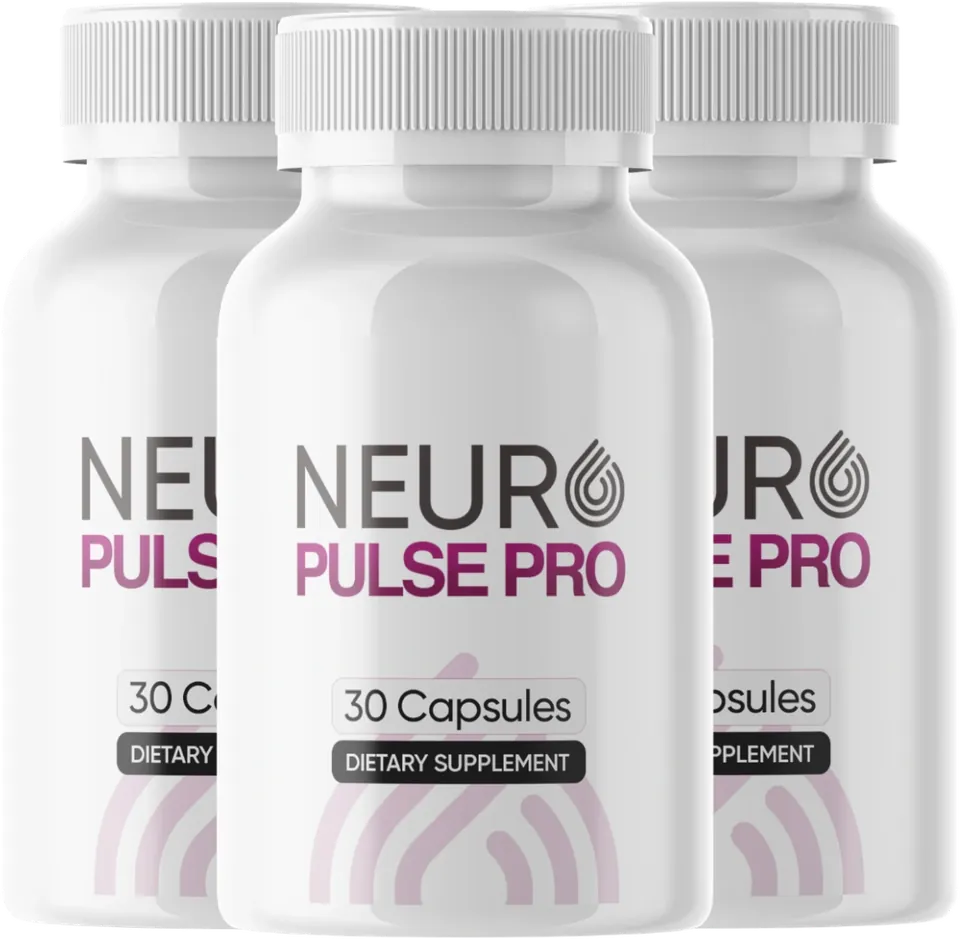
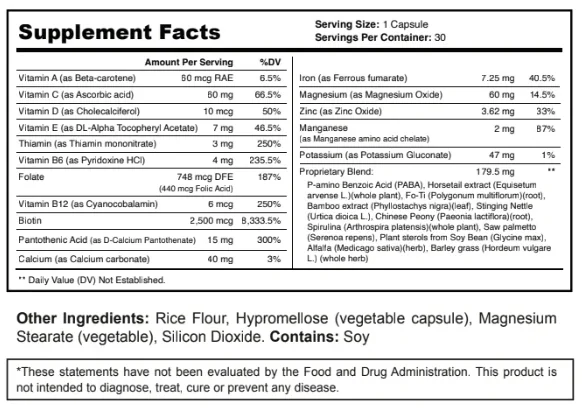
Running Neuro Pulse Pro through its own six checks, honestly: the label prints every vitamin and mineral amount, but the 179.5 mg proprietary blend of 11 ingredients has no single amount published. It has no alpha-lipoic acid or benfotiamine on the label at all, and its B12, B6, thiamin and folate sit well above the daily need, which mainly helps if you are actually low in one of them.
Biotin sits at 2,500 mcg, about 83 times the adequate intake, so the lab-test note above applies directly (National Institutes of Health, 2022). The blend includes fo-ti, so the liver-risk note above applies too (LiverTox (National Institute of Diabetes and Digestive and Kidney Diseases), 2020). The sales page kits carry a 180-day guarantee, with the buyer paying return shipping and no public order phone line. Neuropulsepros is an authorized retailer, not the maker; the label names North Scale as distributor.
| Check | Neuro Pulse Pro |
|---|---|
| Nerve-specific ingredient | None on the label |
| Printed amounts | Yes for 16 vitamins/minerals; no for the 11-ingredient blend |
| Biotin dose | 2,500 mcg (about 83 times the adequate intake) |
| Liver-risk herb | Yes, fo-ti is in the blend |
| Guarantee | 180 days; buyer pays return shipping; no public order phone line |
| Seller vs. maker | Neuropulsepros (authorized retailer); North Scale (distributor on the label) |
None of this means the product is a scam; it means it reads closer to a hair, skin and nail multivitamin than a dedicated nerve formula. See the full Neuro Pulse Pro ingredients breakdown or our nerve comfort guide for the causes and habits that matter alongside any capsule. A 2-bottle kit runs $158; the 6-bottle kit runs $294, the lowest cost per bottle on the sales page.
A short buying process you can reuse
Read the Supplement Facts panel first
Check for alpha-lipoic acid, benfotiamine or B12, and note which amounts are printed versus hidden in a blend.
Check the biotin dose
Anything near or above 1,000 mcg is worth mentioning to your clinician and lab before a blood test.
Scan the blend for fo-ti or horsetail
Both carry their own documented safety notes, separate from any nerve-comfort claim.
Read the actual guarantee terms
Confirm the days, who pays return shipping, and where a claim actually gets sent.
Run any nerve support product, including Neuro Pulse Pro, through these six checks before you order. Full blend list for reference: P-amino Benzoic Acid, Horsetail extract, Fo-Ti, Bamboo extract, Stinging Nettle, Chinese Peony, Spirulina, Saw palmetto, Plant sterols from Soy Bean, Alfalfa, Barley grass. None of these checks takes more than a few minutes, and together they catch most of the gaps between a sales page pitch and the label underneath it.
Choosing a Supplement: common questions
What ingredients are actually studied for nerve comfort?
Alpha-lipoic acid and benfotiamine are the ones most often studied specifically for nerve comfort. Vitamin B12 mainly helps when you are actually deficient.
What is the difference between printed amounts and a proprietary blend?
Printed amounts show a number next to each ingredient. A proprietary blend shows only the combined total weight, so no single ingredient's amount can be checked.
Why does the biotin dose matter?
A high biotin dose, such as 2,500 mcg, can make some blood tests read wrong, including thyroid and troponin tests (U.S. et al., 2022).
Which herbs carry a liver-risk warning?
Fo-ti (He Shou Wu) has a well-established, documented liver-injury risk. Horsetail has a milder, rarer concern tied to thiaminase content.
What should I check about a guarantee before buying?
The number of days, who pays return shipping, where to send a claim, and what information the claim needs to include.
Does it matter if I'm buying from a retailer instead of the maker?
It can. A retailer can help with orders and returns but did not formulate the product and cannot change it.
Does Neuro Pulse Pro have a nerve-specific ingredient like alpha-lipoic acid?
No. None of the label's 16 vitamins/minerals or 11 blend ingredients is alpha-lipoic acid, benfotiamine or acetyl-L-carnitine.
Is Neuro Pulse Pro's proprietary blend disclosed by amount?
No. The 179.5 mg blend of 11 ingredients is shown only as a combined total; no single ingredient's amount is published.
Keep reading
What are the ingredients in Neuro Pulse Pro?
See how one real label holds up against this checklist.
Read →What actually helps nerve comfort?
Causes, red flags, foot care and habits that matter more than any capsule.
Read →How much does Neuro Pulse Pro cost?
Pack sizes, totals and price per day from the official sales page.
Read →Order Neuro Pulse Pro from the authorized retailer
30 capsules per bottle, 1 a day. Packs of 2, 3 or 6 bottles run from $49 a bottle on the sales page, with a 180-day money-back guarantee. Order questions go through the contact page on the official sales site.